Petra Russell · 5 October 2026
Decoding Sequence-Based Behaviors in Web Navigation to Improve Retention Strategies
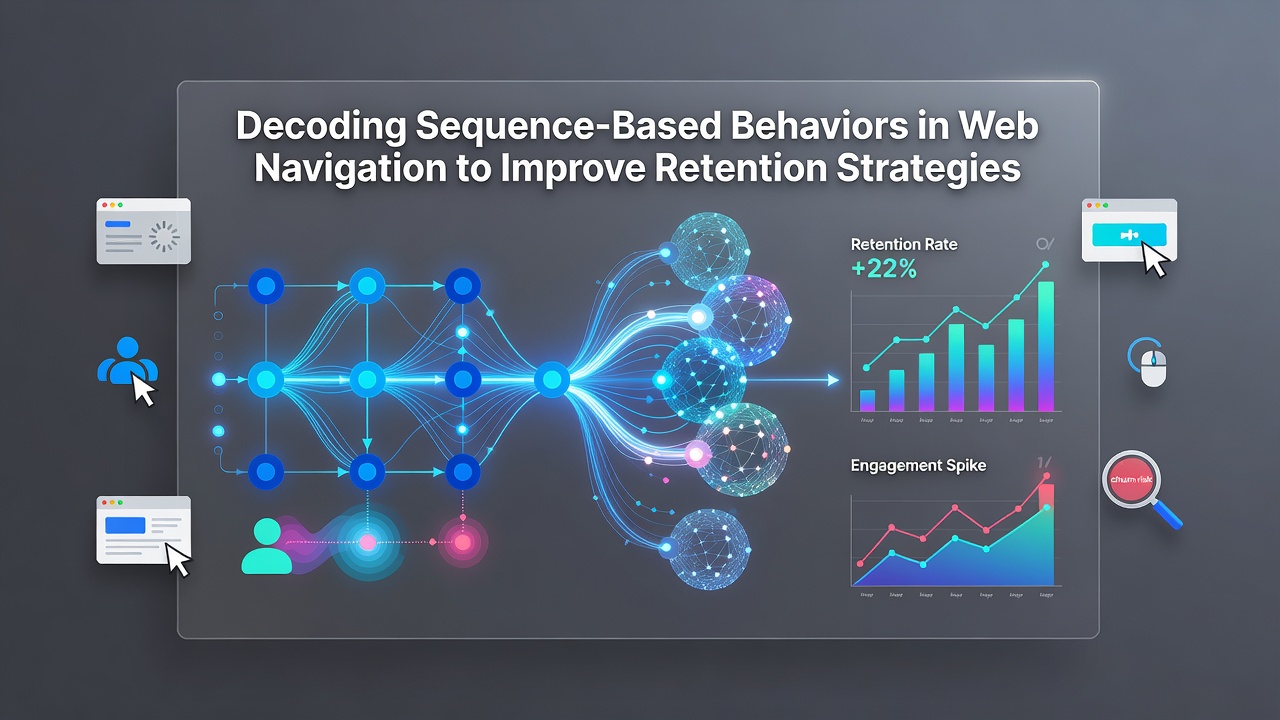
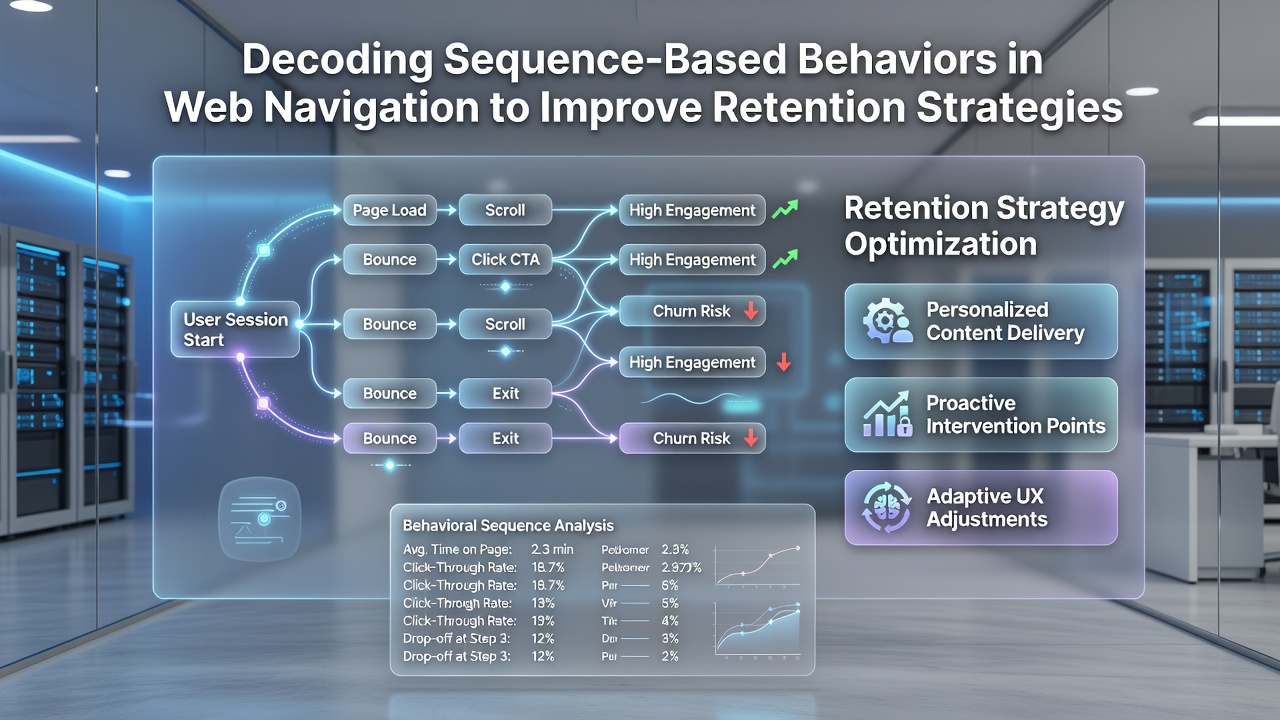
Researchers have long examined how visitors move through digital environments, and sequence-based analysis offers one method for mapping those movements into recognizable patterns. Data from web logs, clickstreams, and session recordings reveal recurring orders of page visits, button interactions, and scroll depths that correlate with continued engagement or early exits. Organizations collect these sequences through server-side tracking and client-side scripts, then apply algorithms such as sequential pattern mining and hidden Markov models to identify frequent subsequences that precede longer sessions. Studies conducted across multiple industries show that certain navigation orders appear more often among users who return within seven days. For instance, a pattern that begins with a homepage visit, followed by a product category page, then a search function, and finally a help article has appeared in datasets where repeat visits reached 34 percent higher rates than in sessions lacking that order. Analysts compare these sequences against baseline distributions to isolate signals that differentiate retained users from those who leave after a single interaction.Methods for Extracting Navigation Sequences
Teams process raw event data by first segmenting sessions according to time thresholds, typically thirty minutes of inactivity, then converting each session into an ordered list of actions. Preprocessing steps remove noise such as automated bot traffic and standardize variable names across different page templates. Once cleaned, the lists feed into tools that calculate support and confidence metrics for every discovered subsequence, highlighting those that exceed chosen thresholds.
Researchers have applied these techniques to e-commerce platforms where product detail pages often sit at the center of high-retention paths. One analysis of 2.3 million sessions found that sequences containing two consecutive detail-page views separated by a comparison tool produced a 22 percent lift in return visits the following week. Similar work on content sites identified sequences that include newsletter signup immediately after an article series as strong predictors of weekly active use.
Linking Sequences to Retention Outcomes
Retention metrics such as seven-day return rate, session frequency, and lifetime page views serve as dependent variables in regression models that treat discovered sequences as independent features. Coefficients from these models indicate which sequences contribute positively or negatively to continued use. When a sequence receives a positive coefficient above a set magnitude, product teams receive alerts to reinforce the steps within that path through interface changes or targeted messaging.
October 2026 brought updated guidelines from the European Data Protection Board that clarified requirements for processing navigation data under the Digital Services Act. Organizations must now document the specific sequences they analyze and provide users with an option to exclude their data from sequence-based modeling. Compliance reports filed in late 2026 showed that firms adopting transparent consent flows maintained sequence datasets large enough for reliable pattern detection while meeting the new transparency standards.
Case Examples from Industry Data
One logistics company examined sequences across its customer portal and observed that users who moved from shipment tracking to invoice download to support chat within the same session returned at rates 18 percent above the site average. The company adjusted the order of navigation links so the invoice option appeared earlier in the tracking workflow, after which the frequency of that three-step sequence increased by 11 percent and overall seven-day retention rose correspondingly.
Academic researchers at a Canadian university published findings in 2025 that used sequence clustering on university library websites. Clusters characterized by repeated searches followed by citation manager exports correlated with higher semester-long login counts. The study reported that students assigned to the high-retention cluster logged in an average of 4.2 times per week compared with 1.8 times for those in other clusters.
Industry reports from the Interactive Advertising Bureau have noted similar patterns in media properties where sequences that combine video view, related article click, and social share button activation predict newsletter subscriptions at elevated rates. These observations appear across multiple regions, indicating that sequence signals can transfer when site structures share comparable layouts.
Implementation Considerations
Deploying sequence analysis requires integration between analytics platforms and content management systems so that identified patterns can trigger real-time adjustments. A/B testing frameworks then measure whether interface modifications based on sequence data produce measurable retention gains. Teams track both the prevalence of target sequences and downstream metrics to confirm that changes affect the intended outcomes rather than simply shifting traffic patterns.
Privacy frameworks in several jurisdictions require that sequence data undergo anonymization or aggregation before long-term storage. Hashing user identifiers and truncating timestamps to day-level granularity represent common approaches that preserve sequence order while reducing re-identification risk.
Conclusion
Sequence-based analysis of web navigation supplies a structured way to connect specific movement orders with retention indicators. Organizations that maintain compliant data pipelines and apply established mining algorithms can surface patterns that appear consistently among returning users. Continued refinement of these methods, alongside evolving regulatory expectations, supports ongoing efforts to align site architecture with observed visitor behavior.